Market Pulse
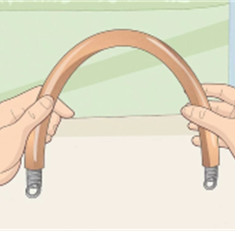
April 2026: Bent But Not Broken
For the month of March, all three major U.S. equity benchmarks fell sharply. The S&P 500 declined 5.1% for the month while the Dow Jones Industrial Average fell 5.4%, and the Nasdaq Composite dropped 4.8%. A rare instance in which the Dow lagged the tech-heavy Nasdaq on the downside, reflecting just how broad and indiscriminate the selling was last month.
The primary catalyst for the March sell-off was the escalation of U.S. military strikes on Iran. Beyond that, the downturn was amplified by ongoing concerns over whether artificial intelligence capital expenditures would eventually pay off or not, and how the Federal Reserve would handle ongoing inflation concerns with elevated interest rates.
April however, has staged an impressive recovery rally. Hopes for a diplomatic resolution has pushed the S&P 500 over the 7,000 mark for the first time, and the Nasdaq just came off its thirteenth consecutive positive session, its longest winning streak since 2009.
Beyond the conflict in Iran, underlying economic data remains mixed. On the positive side, the first-quarter earnings season has opened on a strong note. With roughly 10% of S&P 500 companies having reported as of mid-April, 88% have beaten earnings-per-share estimates, well above the five-year average of 78%. Furthermore, the ISM Manufacturing PMI rose to 52.7 in March, signaling economic expansion for a second consecutive month, along with the Services PMI which also surged to 56.1, its strongest reading since 2022.
One the downside, gas prices are up sharply and hurting the wallets of consumers. Job creation remains sluggish and the spring season for the housing market faces ongoing challenges. The 30-year fixed mortgage rate sits around 6.46%, which is better than the 6.79% average of spring 2025, but that is still high enough to limit refinancing activity as well as keep first-time buyers on the sidelines.
Overall, our sense is that the bull market that began more than three years ago is “bent but not broken.” Despite all the headline noise, corporate earnings are still growing at double-digit rates and even with signs of a slowing economy, we haven’t rolled into a recession.
Reality is, no matter when things improve with Iran, oil prices are expected to remain elevated above pre-war levels suggesting continued investments in energy and oil related companies offers a long-term benefit. Additionally, even if the Strait of Hormuz is opened immediately, it will take months for traffic and transport of goods to stabilize. That means higher gas prices and related products for longer. As a result, we like the idea of adding TIPs or Treasury Inflation Protected Bonds to portfolios to take advantage of both near-term inflation concerns, as well as for long-term protection in case any cease-fire or other agreement break down.
Lastly, we continue to see opportunities in consumer staples like Walmart, Costco, Coke, and McDonalds as well as underperforming sectors like homebuilders and healthcare. Consumer staples have been some of the best performers so far this year, and we expect that to continue even if things escalate with Iran or the economy continues to slow. In contrast homebuilders and healthcare have underperformed yet offer attractive valuations with prospects for long-term growth that we feel are worth establishing new positions in.
What If The Person You’re Developing A Retirement Plan For Changes?
His words struck a deep chord in me, “It turns out that the person I was planning for all along has changed… and that’s why despite doing everything right, it feels so wrong for me right now!”
I knew in an instant how profound his statement was, so I shared, “You have no idea how many people you are going to help by sharing that with me! It concisely clarifies something that has plagued new retirees for years but has been kept silent and unexplored.”
The person doing the planning and the person living the retirement may not be the same individual.
Retirement doesn’t just change your schedule, it changes you. You’re not simply moving from “working” to “not working.” You’re transitioning from a structured identity to an undefined one. When this takes place, even by choice, the psychological scaffolding that held a person together for decades is suddenly gone. What fills that space and who fills that space isn’t always who or what we expected.
Some people discover that the hobbies they planned to fill their days with feel hollow without the contrast of a workweek. Others find that a marriage that functioned beautifully around two separate schedules becomes unexpectedly strained. Some retirees are surprised to find themselves grieving a career they couldn’t wait to leave, while others discover passions, relationships, and versions of themselves they never knew existed.
The reality is, most retirement planning is built on static assumptions like a fixed lifestyle vision, predictable spending patterns, clearly defined goals, and a stable sense of identity. But the person who built the plan was operating under one set of beliefs, priorities, and pressures and the person living the plan may have an entirely different perspective.
All of which is completely normal, remarkably common, but almost never discussed in the planning process. That isn’t a flaw in the plan. It’s a feature of being human. Perhaps the real goal of retirement isn’t to perfectly execute a plan created years ago, but to continually rediscover and realign with the person you are becoming now. Consider:
1. Revisiting goals regularly, not just finances
2. Creating space for experimentation, not just optimization
3. Allowing for uncertainty instead of forcing premature clarity
Questions To Ponder:
What are some differences between the work version of me and the home version of me?
Who am I when no one needs anything from me?
What do I genuinely enjoy now that I’m not trying to be productive?
What am I no longer willing to tolerate with my time, energy, or relationships?
What am I curious about that I never had time or permission to explore before?
Do I feel more energized by structure or freedom right now?
What am I grieving that I didn’t expect to miss about my working life?
What did work give me that I haven’t yet replaced?
How has my relationship with time changed and am I at peace with it?
How have my closest relationships shifted and have I talked about it?
Trivia
- “Where's the beef” is a slogan once used by what fast-food chain? Click for Answer
- What is the British word for a toilet? Click for Answer
- These popular nuts are a member of the peach family. What are they? Click for Answer
- What is a group of porcupines called? Click for Answer

One of the primary ways we grow our business is through client referrals.
We never charge to meet with new clients and discuss their current situation.
Many times people just don’t know who to trust and want an unbiased second opinion from a trusted expert and fiduciary.
Direct Referal Calls:
(248) 890-0834Our Services:
- Flat-Fee Second Opinion
- Investment Management
- Do-It-Together Investing
- Retirement Plan Reviews
- Seminars and Workshops

Robert Laura, AAMS, CMFC, CRPC
Wealth & WellnessGroup
690 Hope St., Suite B
Brighton MI 48116
Market Pulse
August 2026: Midsummer Market TaleJuly was a month of two very different stories playing out under one roof. The Dow and S&P 500 eked out gains of 0.3% and 0.5% respectively. The Nasdaq was the clear laggard, falling more than 3% for its worst month since March 2025. A sharp sell-off in semiconductor and (Read More)
Market Pulse
July 2026: Monitoring The Market’s Wi Fi SignalThe month of June reminded us that markets rarely move in a straight line. The S&P 500 was down 1.1% for the month and the Nasdaq also ended in negative territory, off 2.8%. The bright spot was the Dow which ended up 2.5% for the month, closing at a fresh record. Whe (Read More)
Market Pulse
June 2026: Assessing The Summer Market MomentumFor May, all three major benchmarks surged to new all-time highs. The S&P 500 gained 5.1% for the month, the Dow added 2.8% and crossed the 51,000 milestone for the first time in its history. The Nasdaq was the standout performer, climbing 8.4%. The single most imp (Read More)